Waimate

Finance Minister overrules advice on waste-to-energy facility

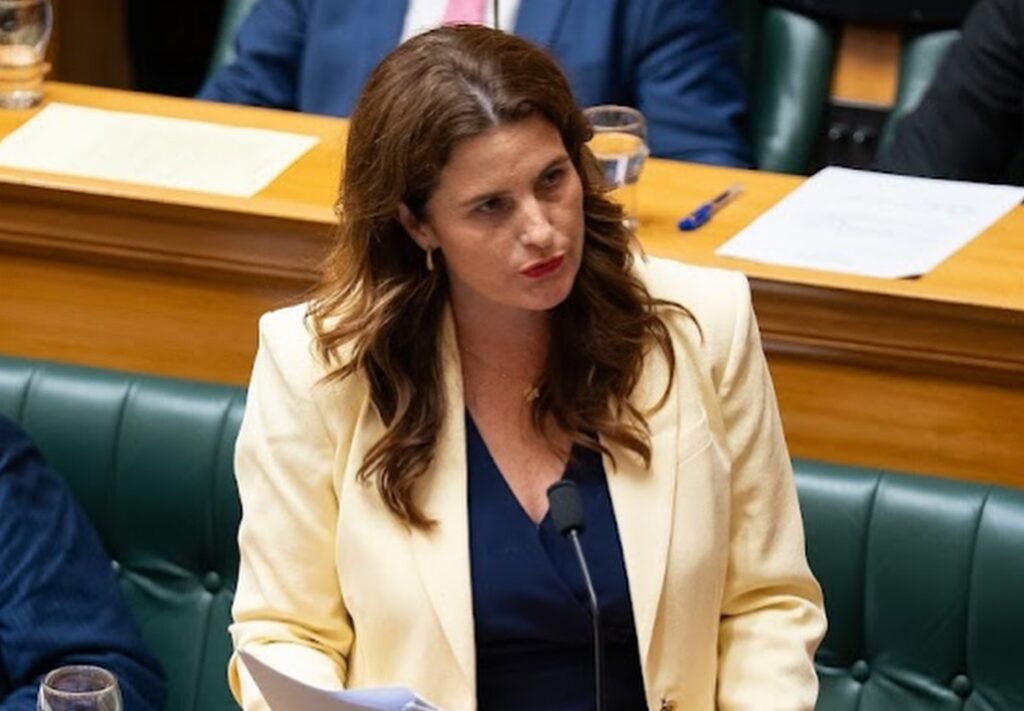
In February, Finance Minister Nicola Willis had to decide if the acquisition of 15 hectares of South Canterbury farmland and significant business assets was contrary to the national interest of New Zealand. 60% Chinese owned South Island Resource Recovery Limited (SIRRL) lodged a consent to purchase the land in May 2023 through the Overseas Investment Office. Willis was required to determine whether the investment was contrary to New Zealand’s national interests as the application was deemed to be of national interest by former Finance Minister Grant Robertson. Willis determined that the investment was not contrary to New Zealand’s national interest. The Minister was provided with a national interest assessment report completed by Land Information New Zealand (LINZ). The LINZ prepared report included input from a cross-government panel of advisors, including the Ministry for the Environment (MfE), the New Zealand Intelligence Service (NZSIS), the Ministry of Agriculture and Trade (MFAT), the Department of Conservation (DOC), and Health NZ/Te Whatu Ora. The report provided special conditions from LINZ. One of these conditions was that the company must not import waste feedstock from outside the South Island. The report stated that the applicant was willing to accept that condition. However, Willis removed the condition. Newsroom asked Willis’ office: Why did she veto the condition? Was it because of lobbying from the company? If not, what other advice led to that decision? Willis responded: “Having read the assessment report, I formed my own view which was that the Environment Court was better placed to assess any impacts through the resource management consent process. I do not recall having been lobbied on this matter.” Willis’ actions inconsistent The national interest report provided to Willis stated that the investment relied on the company to acquire resource consent to build and operate the proposed W-t-E plant. The report also suggested that the applicant may struggle to source the waste entirely from the South Island. Whatever the reason for Willis to remove that condition, her decision removes a significant hurdle for the applicant if the condition remains in place. The Minister stated in her Newsroom response that her view was “The Environment Court was better placed to assess any impacts through the resource management consent process”. However, the national interest report contained several other special conditions to accompany SIRRL’s consent, which Minister Willis did not remove. Surely, if the Environment Court had been better placed to assess impacts regarding the importation of waste, it would also have been better placed to determine all the effects raised in the special conditions.

Finance Minister overrules advice on waste-to-energy facility Read More »

SIRRL’s majority owner and financial backer of Project Kea – CNTY, $2.4 Billion NZ in debt.

China Tianying is described as an environmental protection company involved in the energy-from-waste sector. An article published on April 8, 2024, stated the company had debts of 8.5 billion yuan as of September 2023. Despite these significant debts, recent large-scale investments have seen that debt balloon to 10.7 billion ($2.4 billion NZ) by July 2024. China Tianying (CNTY) is the controlling shareholder of South Island Resource Recovery Limited (SIRRL), the company proposing a waste-to-energy plant for Glenavy, Waimate. READ ARTICLE Despite huge debts, SIRRL application passes OIO’s ‘benefit’ test. Despite China Tianying (CNTY), the controlling shareholder of South Island Resource Recovery Limited (SIRRL), carrying $NZ 2 billion in debt as of September 2023, the Overseas Investment Office (OIO) permitted SIRRL to acquire sensitive land and significant business assets. The proposed $350 million waste-to-energy investment was determined to meet the benefit test. The OIO provided an overview of CNTY in its recommendation report, stating that waste-to-energy was the company’s “core business.”  Surely, such a large debt acquired by a company whose ‘core business’ is waste-to-energy should raise some alarm bells when determining an application involving the building of a waste-to-energy plant. Due diligence should have suggested a risk that such debt may compromise SIRRL’s ability to complete the proposed development, given that CNTY is funding the project. MORE ON OIO DECISION

SIRRL’s majority owner and financial backer of Project Kea – CNTY, $2.4 Billion NZ in debt. Read More »

Oversea Investment Office approve land sale for ‘Waste-to-Poisons’ plant.

South Island Resource Recovery Limited (SIRRL) made an application with the Overseas Investment Office (OIO) in May 2023 to acquire sensitive land, and significant business assets. The decision was made by land information Minister Chris Penk and Associate Finance Minister David Seymour following a recommendation from the OIO to approve the application. Because the application was deemed of national interest, sign off was also required by Finance Minister Nicola Willis, who determined the application was “not contrary to New Zealand’s National Interests.” Read more

Oversea Investment Office approve land sale for ‘Waste-to-Poisons’ plant. Read More »

Convergence – public relations or public manipulation?

South Island Resource Recovery Limited (SIRRL) has enlisted the services of Public Relations firm Convergence to oversee the public rollout of ‘Project Kea’, the proposal to truck 365,000 tonnes of waste to Glenavy, near Waimate, to be disposed of by incineration. Convergence was in close contact with Waimate District Council in August 2021 before the public release of the proposal. This involved the company requesting a list of the town’s “key influencers” in an attempt to gain local support for Project Kea. The company also asked Mayor Craig Rowley for a “supporting statement.” Convergence, as part of their responsibilities, provided a website to disseminate more information about the proposal. However, this website, which was intended to inform the public, was found to contain misleading and false information. Furthermore, it failed to include crucial details about the actual proposal, potentially impacting the public’s understanding and perception of Project Kea. Many people in Waimate believe that the public relations company has been used to manipulate the Waimate community. Learn more about Convergence and its role in Project Kea below. CONVERGENCE

Convergence – public relations or public manipulation? Read More »

A man in a black hoodie burns a dollar bill while smoking in a graffiti-covered alley.

“The company investigated building these plants in NZ and found it was uneconomic”. Evan Maehl, Waste Management NZ.

North & South magazine reporter George Driver asked New Zealand’s two largest waste management companies whether they would support ‘Project Kea’, and their response was NO. “I don’t want to state the obvious,” he says, “But you’ve got the largest waste company in New Zealand, which used to be owned by a Chinese company that operated 10 of these facilities in China, so why aren’t we doing it?” – Evan Maehl, managing director – Waste Management NZ. Read N&S Article Will SIRRL require the importation of waste to feed ‘Project Kea’ ? Below, you can read more about the composition of the waste South Island Resource Recovery Limited intends to burn and where they claim they will source that waste. WASTE

“The company investigated building these plants in NZ and found it was uneconomic”. Evan Maehl, Waste Management NZ. Read More »

pollinators, bumblebees, bees, insects, hymenoptera, entomology, blossom, pollination, close up, macro, bees, bees, bees, bees, bees

Bee’s needs: Why air pollution matters to pollinators.

This Natural England article on the GOV.UK website highlights how air pollution, including nitrogen oxides and volatile organic compounds (VOCs) produced from the combustion of plastics, has devastating effects on pollinator insects. This should be of concern to all of us, not least the food-producing shareholders of Renew Energy Limited (REL), the New Zealand arm of South Island Resource Recovery Limited (SIRRL) Read Article Here

Bee’s needs: Why air pollution matters to pollinators. Read More »

The real NIMBY’S: Food producing shareholders of Renew Energy Ltd.

A honey producer, winemaker and grain grower make up some of the shareholders and directors of a company wanting to build a huge rubbish incinerator, BUT NOT IN THEIR BACKYARDS, in the heart of a food-producing district in Waimate. Philip Alfred Leslie Cropp is a honey producer based in Nelson. Paul Robert Taylor is a cereal grain and seed grower from the Ashburton area. Robert Bruce Grey is a wine grower from the Nelson region. What all these food growers have in common is a significant shareholding in Renew Energy Limited (REL), the New Zealand company with a 40% stake in South Island Resource Recovery Limited (SIRRL), the company behind ‘Project Kea’. See below for more on the shareholders of Renew Energy Limited (REL) REL Shareholders

The real NIMBY’S: Food producing shareholders of Renew Energy Ltd. Read More »

heaven, smoke, steam, environment, clouds, waste incineration plant, chimney, nature, sunset

The dirty truth about waste to energy incineration is that it just doesn’t stack up.

Why is Waste-to-Energy incineration a bad idea for Aotearoa?  In this article, Michael Szarbo from Greenpeace asks the question, ‘How is a heavily state-subsidised Chinese W-t-E model going to work in NZ?’ and why any NZ council would be foolhardy to sign any contracts with SIRRL or any other W-t-E company.   Read Article here Competitive waste market Waste-to-energy companies in China claim subsidies and tax breaks from the Government by claiming to be renewable energy providers. These companies are also sometimes exempt from waste disposal tariffs. These incentives have seen a boom in waste-to-energy builds, and companies are eager to claim the economic advantages.However, these incentives don’t exist in New Zealand. This means any plant in Aotearoa would need to burn as much waste as possible to produce revenue from gate fees and the sale of generated electricity. This incentive encourages the plant operators to burn as much waste as possible to create electricity. Without the required 365,000 tonnes of waste the company intends to burn, ‘Project Kea’ would run at a loss.In New Zealand, waste management companies and councils play a significant role in controlling the waste stream, often with shareholder stakes in landfills. For SIRRL to be competitive in this market, two things are required: available waste and the ability to provide significantly lower gate fees as an incentive to draw customers. While lower gate fees may incentivise customers to support waste-to-energy, they also reduce potential revenue. Waste management companies in New Zealand have raised questions about SIRRL’s stated available waste calculations. This is a significant concern, as the accuracy of these calculations directly impacts the company’s ability to compete in the waste-to-energy market. 

The dirty truth about waste to energy incineration is that it just doesn’t stack up. Read More »

ECan and EPA request further information from SIRRL.

Environment Canterbury and Waimate District Council request more information from SIRRL. ECan stated that the requested information is required to assist in preparing the Key Issues report, which the Council will be required to provide to the EPA under S149G RMA. The 22-page request by ECan included Dr Emily Wilton’s assessment of SIRRL’s air quality emissions report, for which Wilton requested further information from SIRRL. Dr Wilton’s notes highlighted “inconsistencies” between the company’s operational, technical overview and air quality assessment reports in SIRRL’s resource consent application. Read ECan request here “It’s important for the people to have answers” – Paul Taylor, SIRRL. In an April 2023 Stuff article, director Paul Taylor said SIRRL had gone to the “next level” in many of the reports they commissioned, which “were not necessarily required”, but they did it “because we felt it’s important for the people to be able to have answers to those questions.”  As July 2024 rolls around, ‘the people’ still await ‘answers to those questions’, suggesting SIRRL continue to believe information about this proposal is ‘not necessarily required’.

ECan and EPA request further information from SIRRL. Read More »

W-t-E Proposal to be decided in Environment Court.

After receiving an extensive recommendation report from the Environmental Protection Authority (EPA), Environment Minister David Parker has referred the Project Kea proposal to the Environment Court. On 31 August 2023, the Minister for the Environment ‘called in’, or issued a direction, to refer the application to the Environment Court. The direction was issued under section 142(2) of the Resource Management Act (RMA).The Minister asked the EPA for advice on whether the application was of national significance and, if so, whether it should be referred to a Board of Inquiry or the Environment Court. EPA’s role in the processing of ‘Project Kea”. The EPA will publicly notify SIRRL’s application so people can make submissions. Then, they will pass on the application and the submissions to the Environment Court, setting the timeframe for the next steps in the process. The EPA is not involved in the decision-making process. The EPA states they are organising public notification of the direction and the applications under section 149C of the RMA. They also state that they will provide further information about public notification and the submission process on their webpage when it becomes available.   Also available on the EPA’s webpage: The Minister for the Environment’s direction to refer the application to the Environment Court (PDF, 398KB) EPA advice about referring the SIRRL application to the Environment Court (PDF, 2.8MB) EPA Website

W-t-E Proposal to be decided in Environment Court. Read More »