
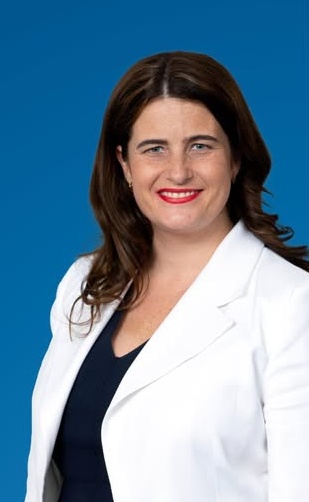
In February 2024, newly appointed Finance Minister Nicola Willis was required to decide whether the South Island Resource Recovery Limited (SIRRL) “Project Kea” waste-to-energy incinerator proposal was contrary to New Zealand’s national interest under the Overseas Investment Act.
Land Information New Zealand (LINZ) prepared a National Interest Assessment Report for that decision. The report did not simply raise local environmental issues. It identified risks going directly to New Zealand’s national interest, including waste-sector dependency, reduced competition, emissions concerns, social opposition, and potential economic exposure if the project failed.
Despite those concerns, Willis determined that Project Kea was “not contrary to New Zealand’s national interest”.
She also personally removed a safeguard condition recommended by LINZ officials which would have restricted the facility’s feedstock to the South Island and prevented future waste importation from further afield.
The National Interest Risks LINZ Identified
LINZ assessed that the project carried a medium national-interest risk in relation to New Zealand’s values and interests:
“LINZ assessed that the alignment of the Investment with New Zealand’s values and interests poses a MEDIUM threat to New Zealand’s national interest. The Investment has the potential to undermine New Zealand’s waste minimisation policies and may compete with other Government objectives.”
LINZ also assessed a medium social-impact risk:
“LINZ assessed that the Investment poses a MEDIUM risk to New Zealand’s national interest in terms of its potential social impacts. There is significant public opposition to the Investment and concerns around the impact of possible emissions to the health and well-being of people, animals and crops.”
The report acknowledged that the project could bring jobs, investment, and new technology. But LINZ also identified a serious downside risk if the facility came to dominate South Island waste disposal:
“However, the Investment could have a negative downstream impact on the waste sector within the South Island in the event that the Facility dominates the South Island waste sector, potentially creating a significant dependency on its continued operation.”
That dependency risk was explained more directly in the report:
“If the Investment leads to the Applicant dominating the market for the consumption of the South Island’s waste, some or all of the South Island landfills may close. This could threaten the resilience of the waste disposal market. Specifically, there could be a build-up of waste, with no alternative options for disposal. In this case, a government bailout may be required.”
That is an extraordinary warning to appear in a national interest report being considered by the Finance Minister.
It shows LINZ was not only considering environmental effects. It was identifying the risk that Project Kea could reshape the South Island waste sector so significantly that, if it failed, the Government could face pressure to step in.
LINZ Recommended a Safeguard
LINZ also noted that municipal solid waste incinerators require continuous feedstock:
“MSW incinerators typically run 24/7 and require a continuous feedstock supply for decades.”
The report warned that Project Kea could create a monopolistic effect on the waste sector:
“This may have a monopolistic effect on the waste sector, and in the event that the Facility shut down for any reason, a waste sector with fewer remaining players and potentially lower landfill may present an important economic risk (as well as a potential downstream social risk where waste is not collected).”
To manage the risk of the project altering waste flows, LINZ identified a clear safeguard:
“The clearest and most achievable condition to manage the above risks would be to require the Applicant to only source feedstock to fuel the Facility from the South Island. This would prevent the redirection of waste from the North Island and ensure the Applicant does not alter its business plan to import waste internationally.”
The released report also indicates that the applicant had advised LINZ it did not intend to import waste from overseas and was comfortable with the condition remaining in place.
So the position was simple:
- LINZ identified national-interest risks;
- LINZ recommended a safeguard condition;
- the applicant was comfortable with that safeguard;
- and the report warned that market domination could result in landfill closures, waste build-up, and a possible government bailout.
Yet Willis removed the safeguard.
What Willis Told Newsroom
On 31 July 2024, Newsroom journalist David Williams asked Willis’ office:
“Why did she veto the condition? Was it because of lobbying? If not, what other advice led to that decision?”
Willis responded:
“Having read the assessment report, I formed my own view which was that the Environment Court was better placed to assess any impacts through the resource management consent process. I do not recall having been lobbied on this matter.”
Willis’ Latest OIA Response
Following release of the National Interest Report under the Official Information Act, further questions were put directly to Willis asking why the importation safeguard was removed while other environmental-related conditions remained, what reasoning informed the override of official advice, and whether any additional discussions, consultations, or third-party engagements informed the decision.
In her 25 May 2026 response, Willis stated:
“I did not consider that the ‘no importation of waste’ condition was necessary to mitigate the risk of harm to New Zealand’s national interest, and that the environmental effects of the proposed model were better assessed through the environmental consenting process, drawing on the appropriate expertise.”
She also stated:
“There were no additional discussions, informal advice, consultations or third-party engagements that informed my decision.”
However, Willis’s reasoning is hard to reconcile, as she left several other environmental impact conditions included by LINZ in place.
The Remaining Question
If Willis’ explanation is taken at face value, the position now appears to be:
- LINZ identified significant national-interest risks;
- LINZ warned that landfill closures and waste-sector dependency could create circumstances where “a government bailout may be required”;
- LINZ recommended a safeguard condition to manage some of those risks;
- the applicant was comfortable with that safeguard remaining;
- Willis removed the safeguard after reading the report, while leaving other conditions in place;
- and no additional advice or third-party engagement informed her decision.
Yet only months later, Project Kea was included in the Government’s Fast-track process — a process designed to reduce and bypass normal Environment Court and Resource Management Act pathways.
That leaves a major unresolved question:
How was a very newly appointed Finance Minister so confident to determine that Project Kea was not contrary to New Zealand’s national interest when the only thing she relied on to make her decision was a report that identified medium national-interest risks, possible landfill closures, waste-sector dependency, and the possibility that “a government bailout may be required” — and how was she just as confident to remove a safeguard condition recommended by expert officials on what her OIA response now suggests was effectively her opinion alone?